On this page
Sizing a vent silencer for high-pressure gas blowdown comes down to a handful of process parameters: how much gas must be released, across what pressure ratio, what the gas is and how hot it is, what noise level is acceptable at which location, and how much backpressure the vent system can tolerate. This article explains what each of those drivers does to the size and construction of the silencer, and what information to have ready when you specify one. It deliberately contains no sizing formula; the reason why is part of the story.
Why a high-pressure vent is so loud
When a vessel, compressor loop or pipeline section is depressured to atmosphere, gas stored at high pressure escapes through a comparatively small opening. For most process gases the flow chokes once the upstream pressure exceeds roughly twice the downstream pressure: the gas reaches the speed of sound at the narrowest point and keeps expanding, supersonically and chaotically, beyond it. Blowdown pressure ratios sit far above that threshold, so the vent behaves as an underexpanded sonic jet for most of the event.
Turbulent jets are formidable noise sources. Classical aeroacoustics puts the sound power of a subsonic jet near the eighth power of its velocity, and a choked jet adds shock-associated noise on top of the turbulent mixing noise. An unsilenced high-pressure vent is therefore typically among the loudest single noise sources an industrial site can produce, prominent enough that API Standard 521, the reference standard for the design of pressure-relieving and depressuring systems, includes a method for estimating the sound pressure level of a relief discharge to atmosphere, a method that itself applies only while the flow is choked [1].
The noise is broadband with a strong high-frequency, hissing character, released from an elevated, unshielded point with a clear propagation path across the site boundary.
What “sizing” a vent silencer actually means
Sizing is two coupled exercises. The acoustic one: establish the difference between the predicted noise of the bare vent and the level the project can accept at the governing location: that difference, across the frequency spectrum, is the insertion loss the silencer must deliver. The aerodynamic one: provide a flow path that passes the peak mass flow within the allowable pressure drop, in a shell that withstands the temperatures and forces of a blowdown. The quantities involved, insertion loss, the flow noise a silencer generates itself, and total pressure loss, are exactly those defined in ISO 7235, the laboratory measurement standard for ducted silencers [2]. A vent silencer is process equipment as much as acoustic equipment, which is why it belongs to both our industrial noise control portfolio and our pressure control scope.
The parameters that drive vent silencer sizing
Mass flow, and the blowdown profile
Peak mass flow is the largest single geometric driver: it sets the flow area the silencer must offer, and with it shell diameter and length. The profile matters too: an emergency depressuring decays from its initial peak, while a start-up vent may hold a steady rate for minutes. The sizing case is normally the worst credible combination of flow and pressure.
Pressure ratio and upstream conditions
The ratio of upstream pressure to atmosphere sets the jet velocity, and with it the strength and character of the noise source, and it determines how much pressure letdown the silencer inlet must manage in a controlled way. Upstream pressure and temperature together fix gas density and the actual volumetric flow at the inlet, which is what the internal flow areas are really sized against.
Gas properties and temperature
Molecular weight and specific-heat ratio govern the speed of sound and the density of the gas: at the same mass flow, a hydrogen-rich stream, natural gas, steam and air behave differently both aerodynamically and acoustically. Temperature drives volumetric flow, material selection and the choice and protection of the acoustic fill. A silencer sized for air is not automatically right for the same mass flow of another medium.
Target noise level, and where it applies
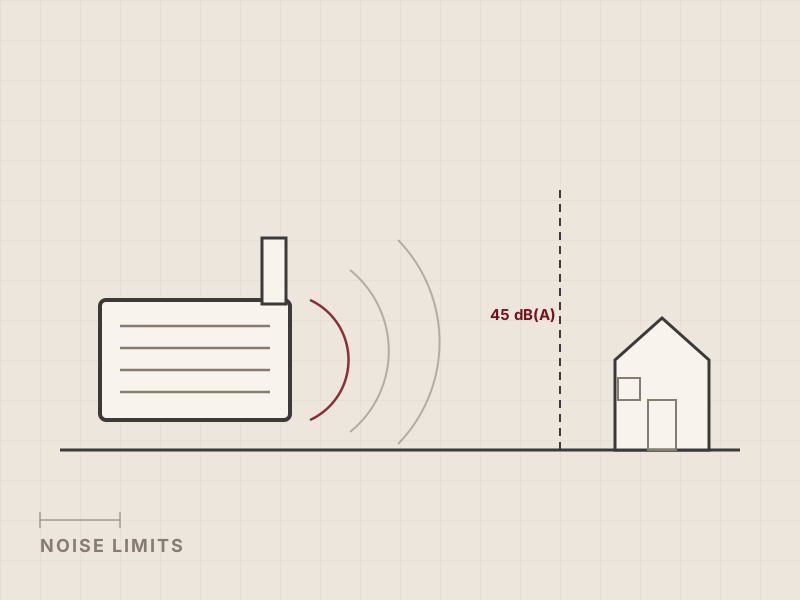
A vent silencer is never sized to “be quiet”; it is sized to meet a stated level at a stated place: a site-boundary or receptor limit from the environmental permit, a workplace requirement near the vent (in the EU, occupational noise duties stem from Directive 2003/10/EC [3]), or a project specification at a defined distance. Required insertion loss is the gap between source and target at that location, so the same vent can need a markedly different silencer on a remote site than beside a manned platform. Always specify level, location and basis together.
Allowable backpressure
Everything in the disposal path (tailpipe, fittings, silencer) adds resistance, and built-up backpressure can reduce the capacity or destabilise the operation of the relief or blowdown device it serves. The allowable pressure drop across the silencer is therefore a safety constraint, not a preference. It also pulls against the acoustics (attenuation wants flow control, backpressure wants free area), and resolving that tension is what the sizing balances, and why silencer and relief system should be engineered together rather than in sequence.
Duty and service
An emergency blowdown that may occur once in years, a start-up vent used weekly and a continuous letdown are judged differently: by authorities, by neighbours, and in materials and fatigue terms. Frequent or continuous duty pushes both the noise target and the construction toward the conservative end; state the event type and frequency in the enquiry.
Inside the silencer: how the architecture answers
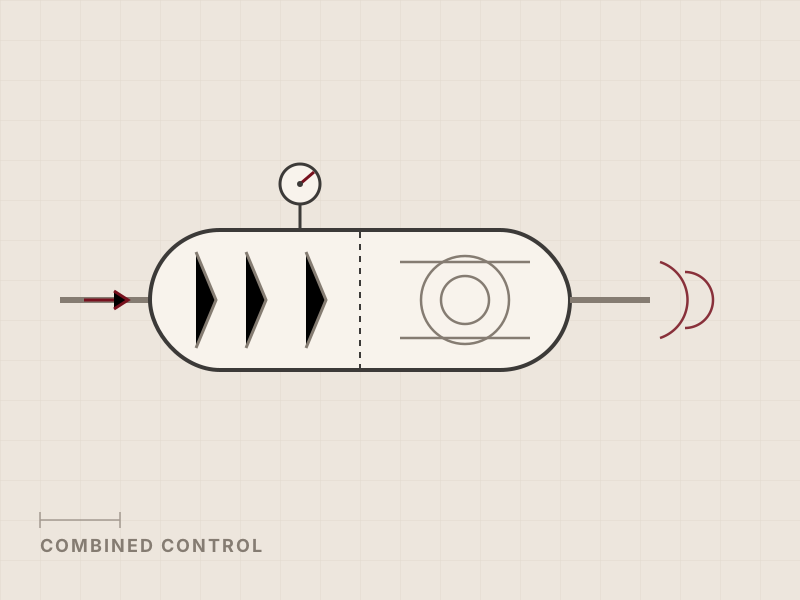
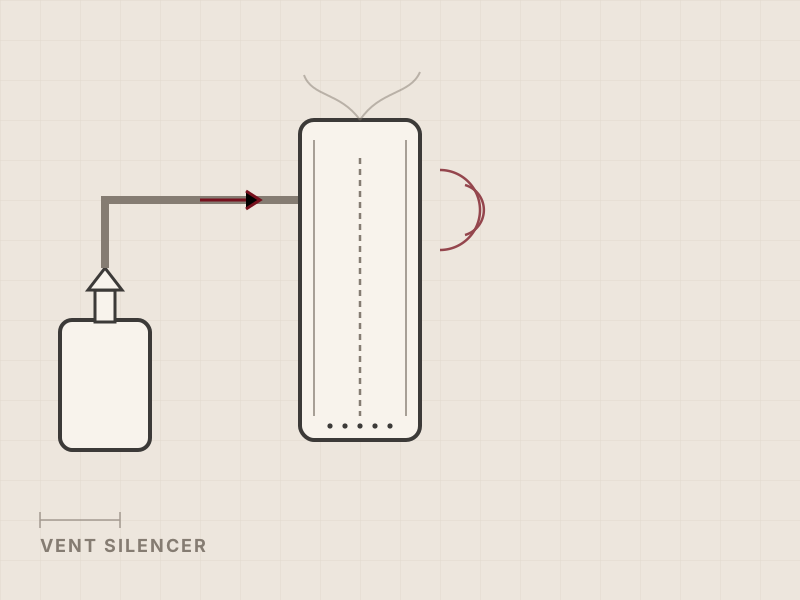
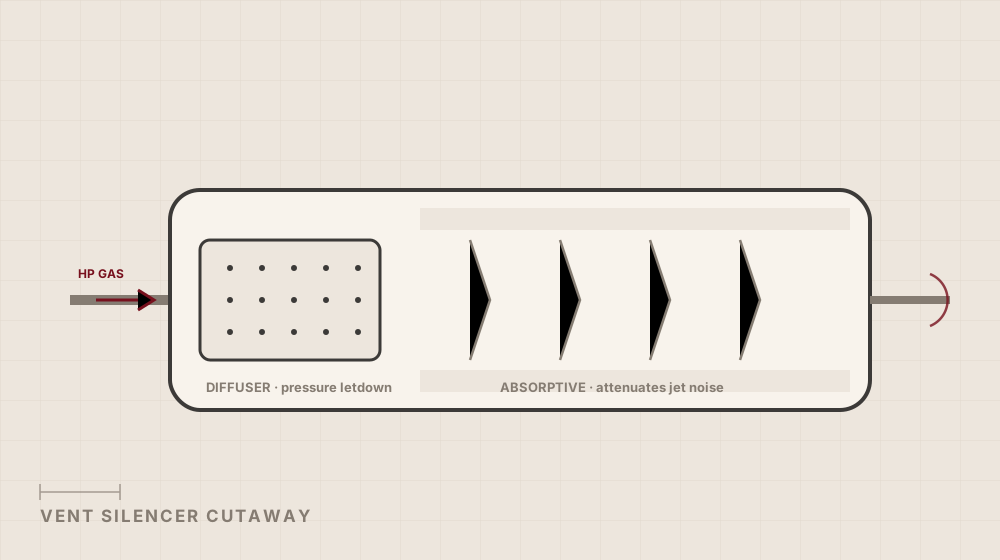
A high-pressure vent silencer has two functional sections. A multi-stage diffuser takes the pressure letdown in controlled steps, replacing one violent expansion with many small jets across perforated stages: small jets at moderate pressure ratios generate less sound energy, and what they do generate shifts to higher frequencies. Downstream, an absorptive section (flow passages lined with acoustic fill behind perforated facings) soaks up that remaining broadband, high-frequency energy before the gas leaves the outlet. Shell diameter follows largely from velocity control: passage velocities must stay low enough that the silencer’s self-generated flow noise does not set a floor under the achievable level [2]. This architecture is specific to venting duty; it has little in common with the reactive chamber silencers used against low-frequency engine exhaust pulsation, covered in our overview of exhaust silencer types.
Why there is no catalogue table
Every driver above interacts with the others: change the gas, the temperature or the target and the same mass flow needs a different silencer. At Axces, sizing runs through an aero-acoustic calculation validated against measured performance, and we publish the inputs that calculation needs, not the method itself. That is partly protection of engineering IP; mostly it is caution: a silencer picked from a generic chart can pass the noise check and still consume backpressure that relief capacity depends on. Treat vent silencer sizing as a data exchange with the supplier, not a catalogue lookup.
What to have ready when you specify a vent silencer
- Gas composition, or molecular weight and specific-heat ratio, and whether liquid carry-over is possible
- Peak mass flow, plus the blowdown profile or duration if known
- Pressure and temperature upstream of the silencer at the sizing case
- Discharge arrangement: tailpipe size, outlet height and orientation
- Allowable pressure drop across the silencer, and its basis in the relief-system design
- The noise requirement: level, location or distance, and its origin (permit, project spec, workplace limit)
- Event type and frequency: emergency only, routine start-up, or continuous duty
- Site constraints, plus material and code requirements
The closer this information is to the final relief-system design, the closer the first proposal will be to the silencer that ships.
If a blowdown, depressuring or start-up vent on your project carries a noise requirement, explore our vent silencers for high-pressure venting, or send your venting case to our engineers for a sizing proposal.
References
- American Petroleum Institute. API Standard 521, Pressure-relieving and Depressuring Systems, 7th Edition, June 2020: includes a method for estimating the sound pressure level of a pressure-relief discharge to atmosphere, applicable to critical (choked) flow only. https://www.api.org/products-and-services/standards/important-standards-announcements/standard521
- International Organization for Standardization. ISO 7235:2003, Acoustics: Laboratory measurement procedures for ducted silencers and air-terminal units: Insertion loss, flow noise and total pressure loss. https://www.iso.org/standard/30385.html
- European Union. Directive 2003/10/EC of the European Parliament and of the Council of 6 February 2003 on the minimum health and safety requirements regarding the exposure of workers to the risks arising from physical agents (noise). https://eur-lex.europa.eu/eli/dir/2003/10/oj/eng