On this page
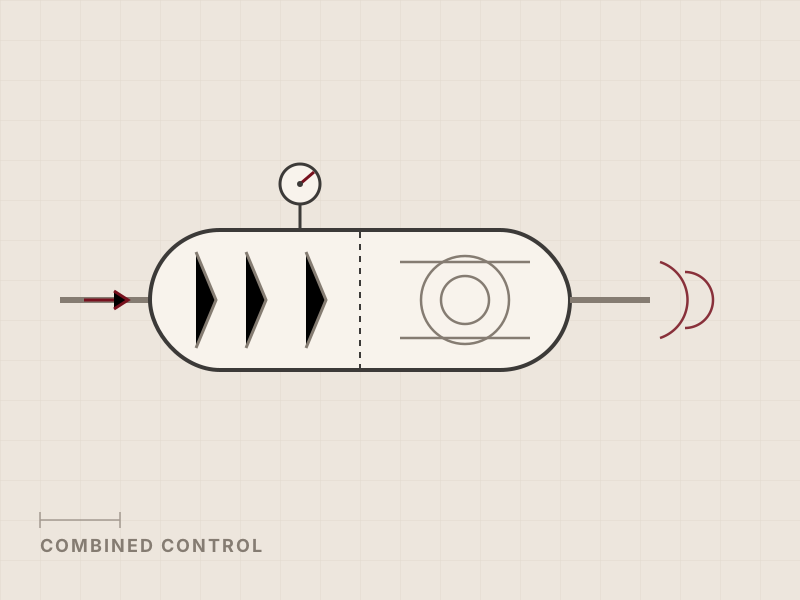
Combined pressure and noise control is one engineering problem wearing two names: sound is pressure oscillation, so the event that releases or disturbs gas pressure is also the event that generates the noise. That is why two products, vent silencers and pulsation dampeners, appear in both the Axces pressure control range and the noise control range: each is a single device engineered to perform both duties at once. This article explains the physics the two duties share, how each device combines them, and why specifying both requirements together produces better hardware than bolting an acoustic fix onto a pressure design.
Why a pressure problem is a noise problem
An acoustic wave is a small, fast pressure fluctuation riding on the static pressure of the gas. “Pressure control” and “noise control” therefore differ in amplitude, frequency and consequence, not in physics. Two situations make the connection unavoidable on almost every plant:
High-pressure letdown generates aerodynamic noise. When gas is vented across a large pressure ratio (a blowdown, a relief discharge, a start-up vent) stored pressure energy converts to kinetic energy. Once the upstream pressure is roughly double the downstream pressure the flow chokes: the jet leaves the opening at the speed of sound and keeps expanding chaotically beyond it. Turbulent mixing and shock structures convert part of that energy into broadband sound, and the conversion rises steeply with jet velocity. Many of the loudest single noise events on an industrial site are, at root, pressure events.
Pressure pulsation is noise travelling inside the pipe. A reciprocating compressor delivers gas in discrete slugs, so its piping carries a train of pressure pulses at running speed and its harmonics. That pulsation is, quite literally, intense low-frequency sound in the gas. Acting on elbows, reducers and closed ends, it produces shaking forces and vibration; sustained, it fatigues welds and small-bore connections; and it radiates outward as audible noise through pipe walls and connected equipment.
In both cases, solving one half of the problem in isolation fails. Dissipating pressure without acoustics creates an unacceptable noise source; adding acoustics without respecting the pressure function can starve a relief device of capacity or cost compressor power. This is why the pressure control and industrial noise control portfolios at Axces share hardware where the physics demands it.
Vent silencers: staged letdown and absorption in one vessel
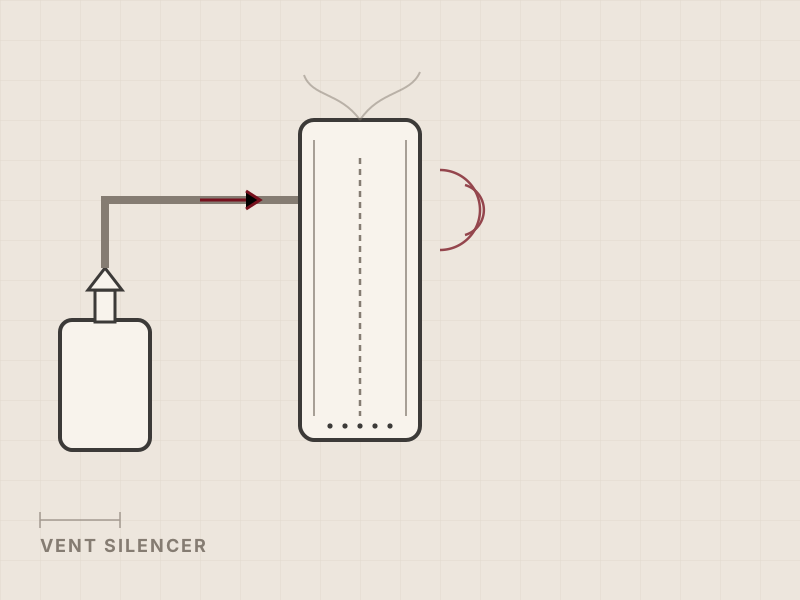
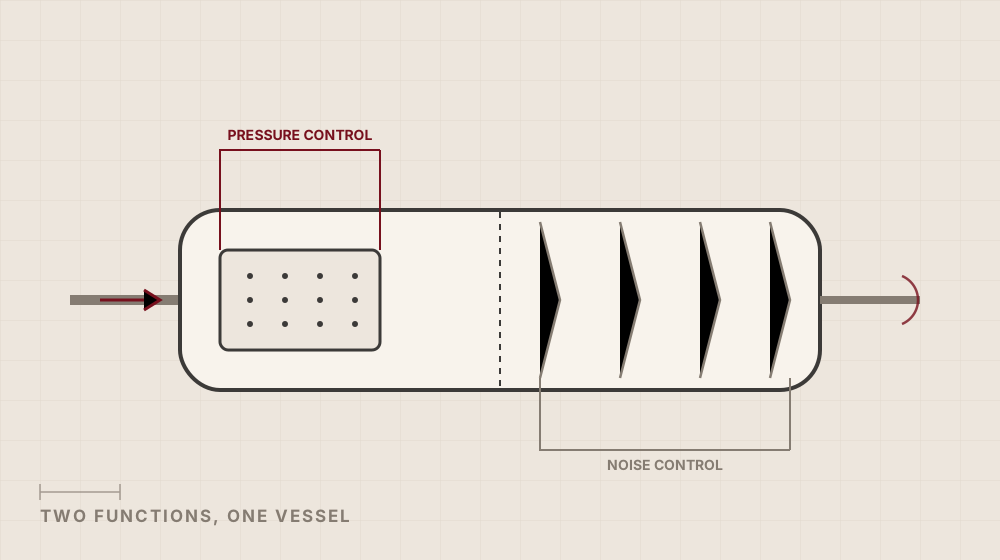
A high-pressure vent silencer is the clearest example of one device doing both jobs, because its two internal sections map directly onto the two duties.
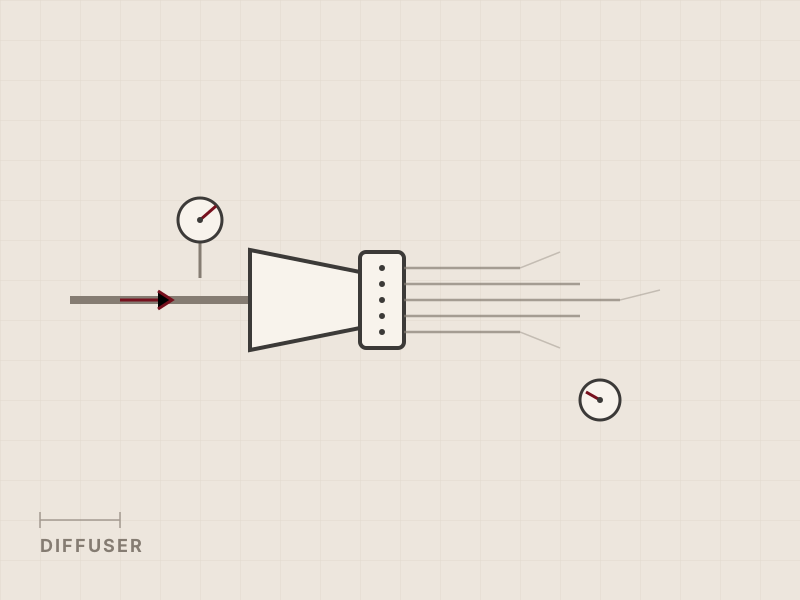
The inlet section is a multi-stage diffuser, a pressure-control element. Instead of one violent expansion at the pipe exit, the letdown is taken in controlled steps across perforated stages, replacing a single under-expanded jet with many small jets at moderate pressure ratios. Small jets generate far less sound energy, and what they still generate shifts toward higher frequencies. The downstream section is absorptive, an acoustic element: flow passages lined with acoustic fill soak up the remaining broadband noise before the gas leaves the outlet.
The two sections are not independent. The diffuser fixes the level and spectrum the absorptive section must deal with; the absorptive section’s free area feeds back into the total pressure loss; and the whole assembly sits in a relief or disposal path, where its flow resistance acts as backpressure on the device it serves, a safety-relevant parameter, not a comfort figure. How each process parameter pushes the design one way or the other is covered in our guide to sizing a vent silencer for high-pressure gas blowdown.
Pulsation dampeners: one set of internals, smoothing and silencing
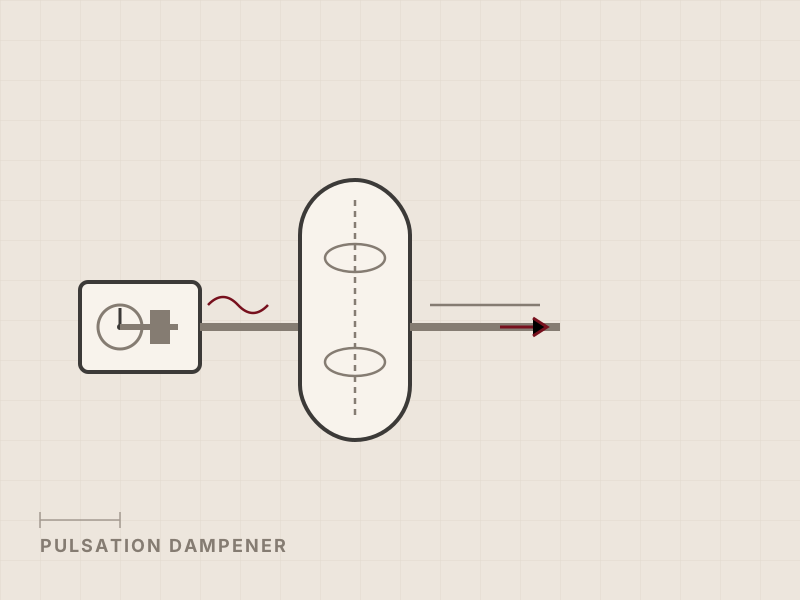
A pulsation dampener mounted at a reciprocating compressor performs the same double duty with a single set of internals. As a pressure-control element, its gas volume absorbs the flow non-uniformity of each stroke, so a far steadier flow enters the piping and a steadier pressure reaches the compressor valves and the downstream process. As an acoustic element, its volumes, choke tubes and baffles form a low-pass filter: steady flow passes through, while pressure oscillation above the filter’s cut-off is strongly attenuated before it reaches the line.
These are not two features bolted together. The acoustic filter is the pressure smoother. The same internals that protect piping from shaking forces and fatigue also remove the source of vibration and airborne noise, steady the flow meters and protect the compressor itself. Pulsation control is an explicit deliverable under the applicable reciprocating compressor standards; the standards framework, the damage mechanisms and the design approaches are covered in depth in our article on pulsation dampeners and reciprocating compressor pulsation.
Backpressure: the constraint both duties share
In both devices, acoustic performance is bought with flow resistance. More diffuser stages, tighter perforations or a longer absorptive path attenuate more, and drop more pressure. Smaller choke tubes filter lower frequencies, and cost pressure drop continuously, as compressor power, for the life of the machine. The pressure side sets the budget the acoustic side may spend: for a vent silencer, allowable backpressure is bounded by the stability and capacity of the relief or blowdown device upstream; for a dampener, it is bounded by the power and performance penalty the project will carry.
The combined design is therefore a three-way balance: attenuation against pressure loss against size and weight. Within a fixed pressure budget, more attenuation generally means a larger device; within a fixed envelope, it means accepting more pressure loss. Where the balance point sits depends on every process parameter at once, which is why it is resolved in an aero-acoustic design calculation against your stated budgets rather than read from a generic chart, and why both budgets, pressure and acoustic, need to be in the enquiry from the start.
One device, one responsibility
Where a duty genuinely combines pressure and noise, and for venting and compressor pulsation it almost always does, a single combined device has structural advantages over a pressure component with a silencer added on:
- One vessel, fewer flanges: fewer potential leak paths, less steel, less plot space.
- One pressure-drop budget, spent deliberately across letdown and attenuation, instead of two stacked allowances negotiated by different parties.
- A matched duty split: letdown staging designed against the absorption that follows it, not corrected by it afterwards.
- Single responsibility for both guarantees: when one supplier owns the pressure performance and the acoustic performance, there is no interface to dispute if either is missed.
The failure mode to avoid is sequential specification. A noise limit discovered after the pressure hardware is frozen becomes a retrofit silencer consuming backpressure nobody budgeted; an acoustic upgrade that changes a dampener’s bottle size late in design ripples into piping layout and supports. State both requirements in one enquiry and let one calculation balance them.
That enquiry should contain the process data (gas composition, flows, pressures, temperatures), the allowable pressure drop with the basis behind it, and the acoustic requirement expressed properly: the quantity, the level, the location where it applies, and the source spectrum if available. Our guide to specifying dB(A) reduction targets and acoustic performance covers exactly what makes a noise requirement answerable.
If a venting, blowdown or compressor project on your desk carries a pressure constraint and a noise limit on the same equipment, explore our vent silencers and pulsation dampeners, or send both requirements to our engineers and get one device engineered for both duties.
References
This article is deliberately qualitative: it states no numeric limits, standard clauses or sizing values, and its engineering content (letdown noise generation, pulsation behaviour, acoustic filtering and the backpressure trade-off) is settled engineering requiring no citation. The standards governing relief-system noise estimation and reciprocating compressor pulsation control are referenced in full in the two in-depth articles linked above.