Dispersion Control · Noise Control
A 23.9 m stainless steel stack with a built-in fan silencer for a steel plant
A 23.9 m single-wall stack in 316L stainless steel for a process installation at a steel plant in Western Europe, with a tube-type silencer built into its Ø1.9 m bottom section. It takes up to 35,000 Nm³/h of fan exhaust gas at 211 °C and is guided by the plant's own steel structure at four levels.
- Industry
- Industrial & EPC
- Location
- Western Europe
- Year
- Solutions
- Dispersion ControlNoise Control
- 23.9 mStack height
- 35,000 Nm³/hGas flow
- Ø1.9 mSilencer section
- 316LStainless steel
The challenge
A process engineering contractor building an installation at a steel plant in
Western Europe needed a stack for the exhaust of a large fan: up to
35,000 Nm³/h of flue gas at 211 °C, about 72,500 m³/h at operating
conditions. The fan duct would reach the stack about 2.5 m above its base.
The fan’s noise had to be dealt with before the gas left the stack, and the plant’s own steel structure stood next to the stack position and could take lateral loads. The contractor also needed the stack’s support forces early, because the design of the foundations and the steelwork depended on them.
Our approach & engineering
A silencer inside the stack
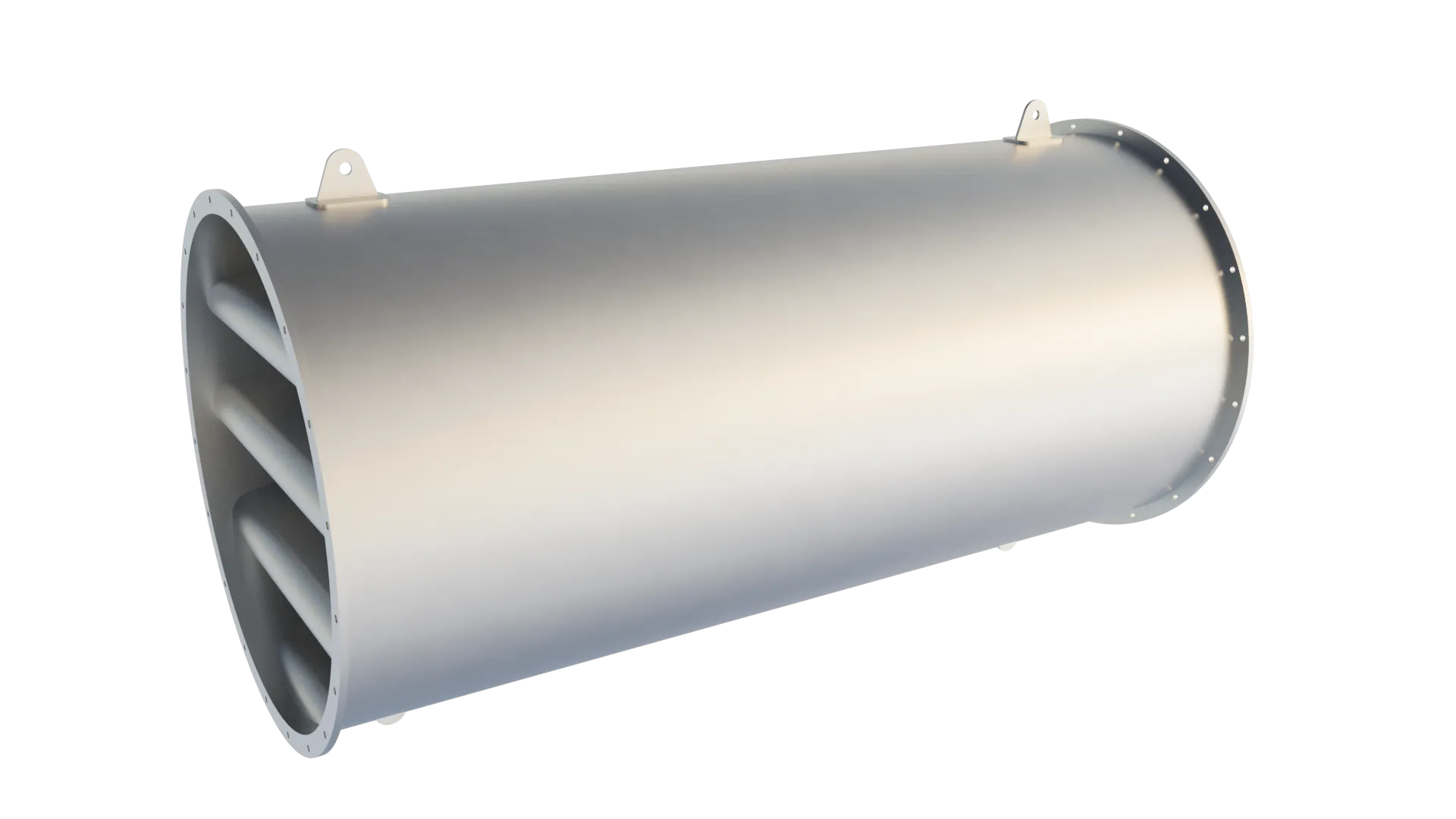
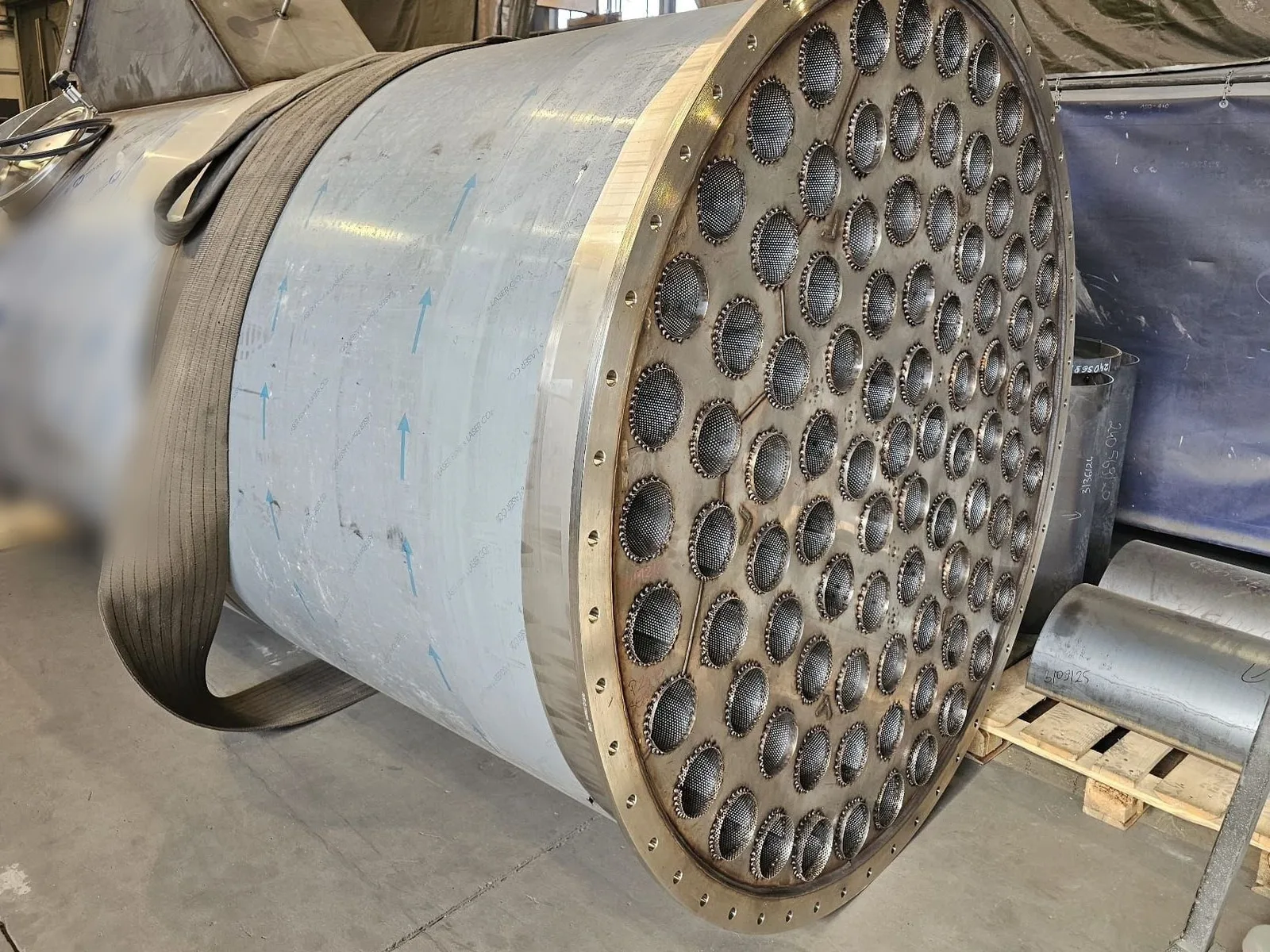
Instead of a separate silencer in the fan duct, Axces built a tube-type silencer into the bottom of the stack. The gas passes through rows of perforated tubes welded into a tube plate. This type of silencer is short, keeps the back pressure low, and its housing is part of the stack itself.
The silencer section is Ø1,900 mm, wider than the Ø1,200 mm shaft above
it, so the gas passes it at a lower velocity. A transition on top of the
silencer carries the shaft. The fan duct enters the silencer section through a
rectangular connection at 45°.
Guided by the plant’s steelwork
The 23.9 m shaft is guided by brackets on the plant’s steel structure at four
levels, at 4.9, 8.9, 13.9 and 18.9 m, so only the top 5 m stands
free. With that support the calculated critical wind speed for vortex shedding
is 93 m/s, far above any design wind, so the stack does not need a vibration
damper. Our article on
industrial stack design loads
explains why vortex shedding governs slender stacks.
316L with no corrosion allowance
Axces advised 3 mm AISI 316L for the whole stack, with no corrosion
allowance, rather than carbon steel with a 2 mm allowance and a heat-resistant
coating. The stainless shell needs no coating, and the stack is designed for a
25-year life.
- Tube-type silencer built into a
Ø1,900 mmbottom section Ø1,200 mmshaft in3 mmAISI 316L,23.9 mhigh- Guided at four levels by the plant’s steelwork; the top
5 mfree - No vortex-shedding damper needed
- Support forces sent to the contractor in October 2024 for the foundation and steel design
Scope of supply
- 1 × stack,
23.9 m,3 mmAISI 316L:Ø1,200 mmshaft on aØ1,900 mmbottom section, delivered in three flanged sections - Tube-type silencer built into the bottom section, with a rectangular fan connection at 45°
- Guide brackets for four support levels, with bolts, nuts, washers and gaskets
- Measurement ports, earthing lugs and a nameplate
- Structural and dynamic calculation, including the support forces for the plant’s steelwork
Results
The stack was delivered to the steel plant in three sections in 2025, with its guide brackets and fixings on a separate pallet. Because the support forces were known in October 2024, the contractor could design the foundations and the steelwork around the stack before it was built.
- One stainless steel stack with an integrated fan silencer, on site in 2025
- Silencer and stack in one component: no separate silencer in the fan duct
- Guided by existing steelwork, so no separate support structure was needed
316Lshell with no coating to maintain
Related reading
- Freestanding, guyed, or self-supporting: choosing an industrial stack configuration: when a stack is better stayed by a nearby structure
- Industrial stack design loads: wind, seismic, and vortex shedding explained: the load cases that govern a stack’s design
- Understanding dB(A) reduction targets: how to specify acoustic performance: how to set the noise requirement a silencer is designed to
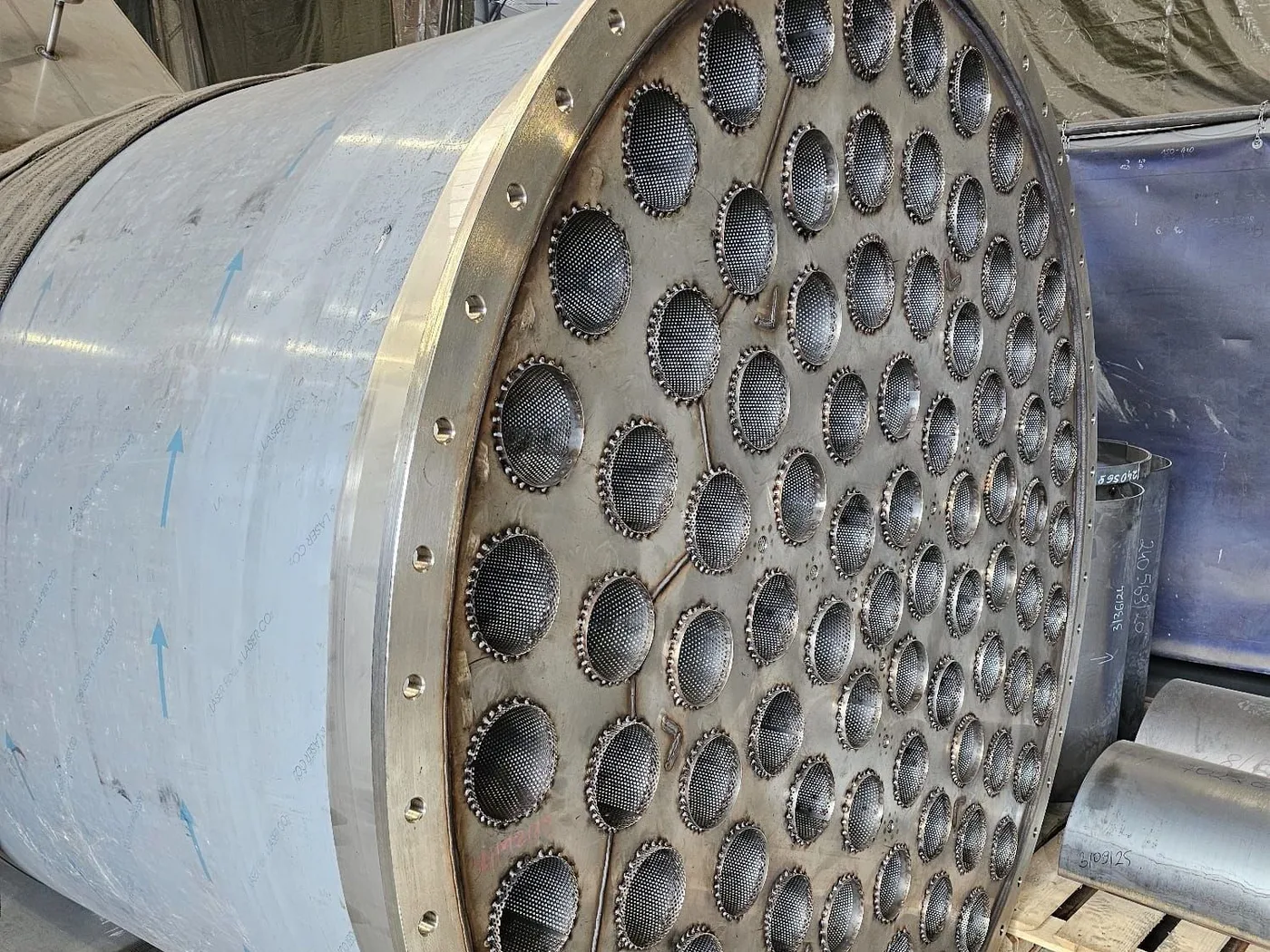
The silencer's tube plate: the gas passes through rows of perforated tubes.