Noise Control
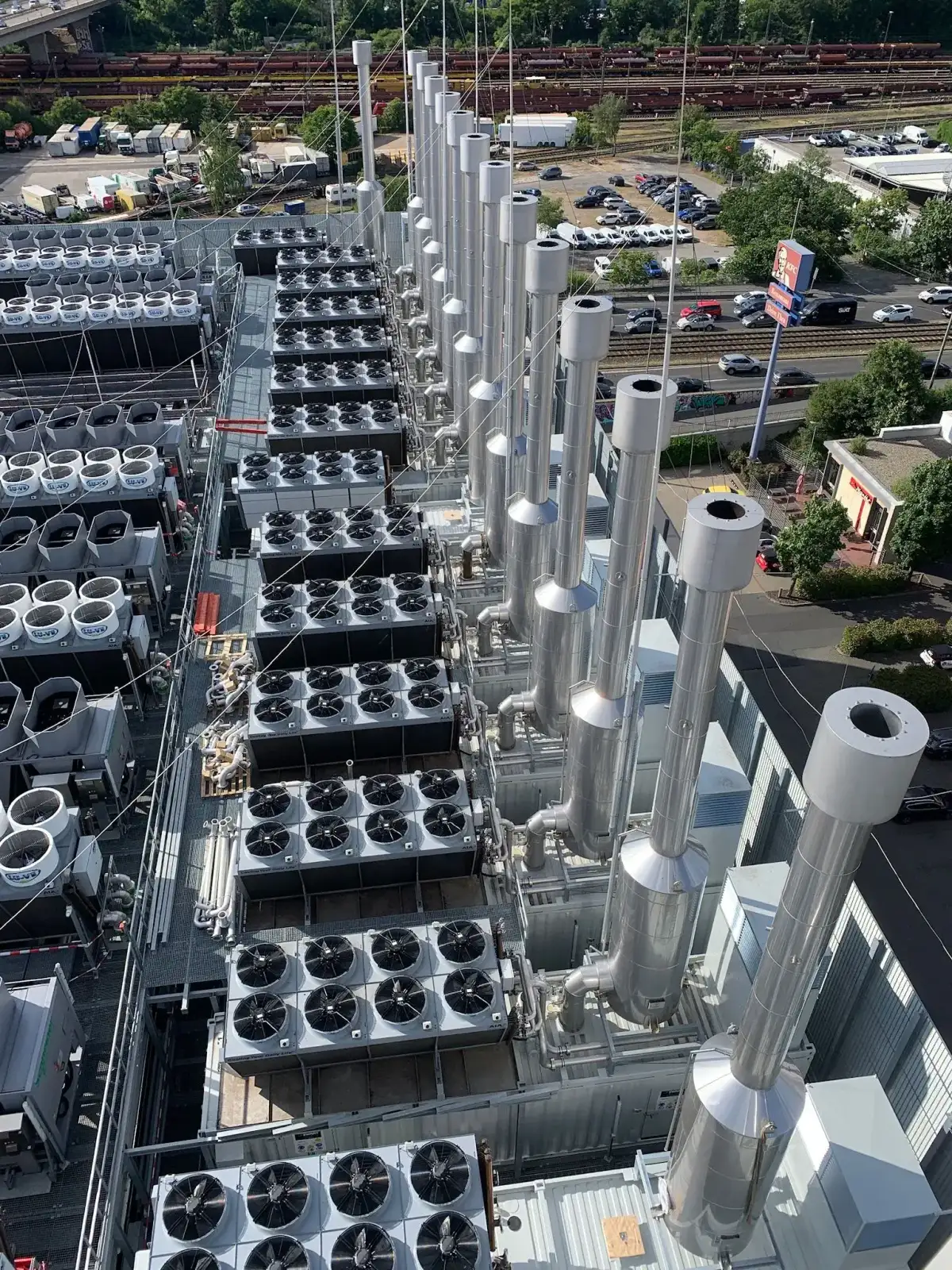
14 exhaust systems for a German hyperscale datacenter
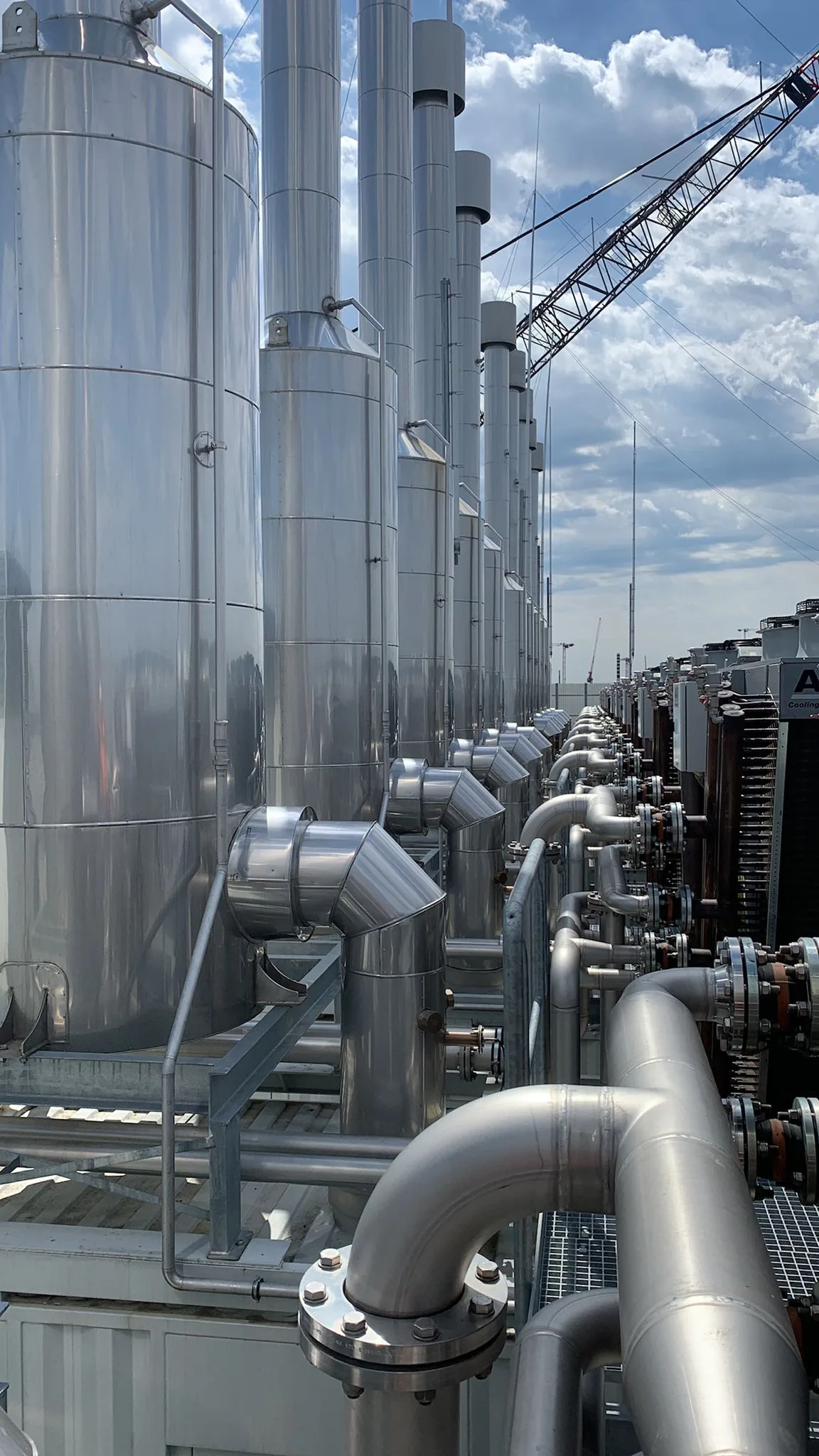
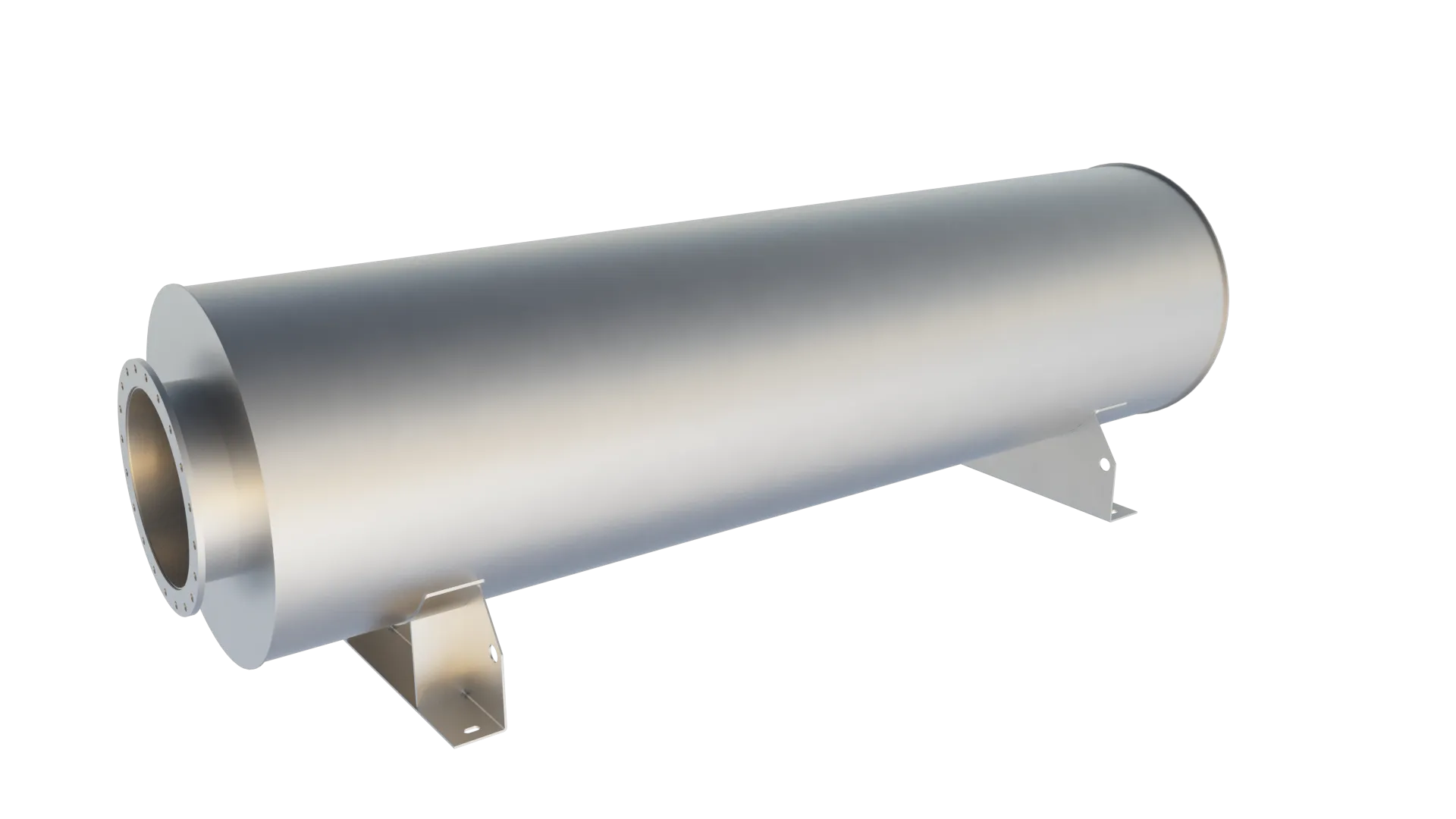
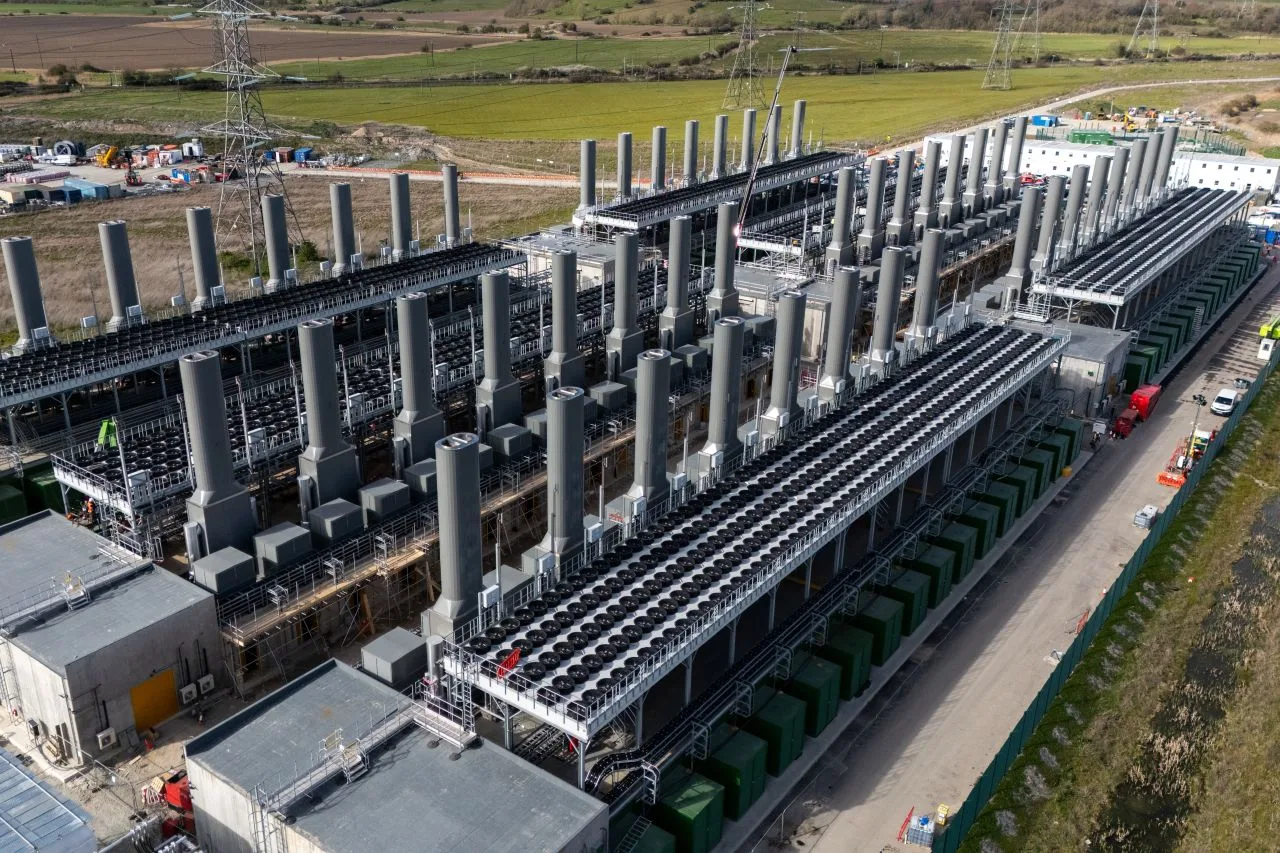
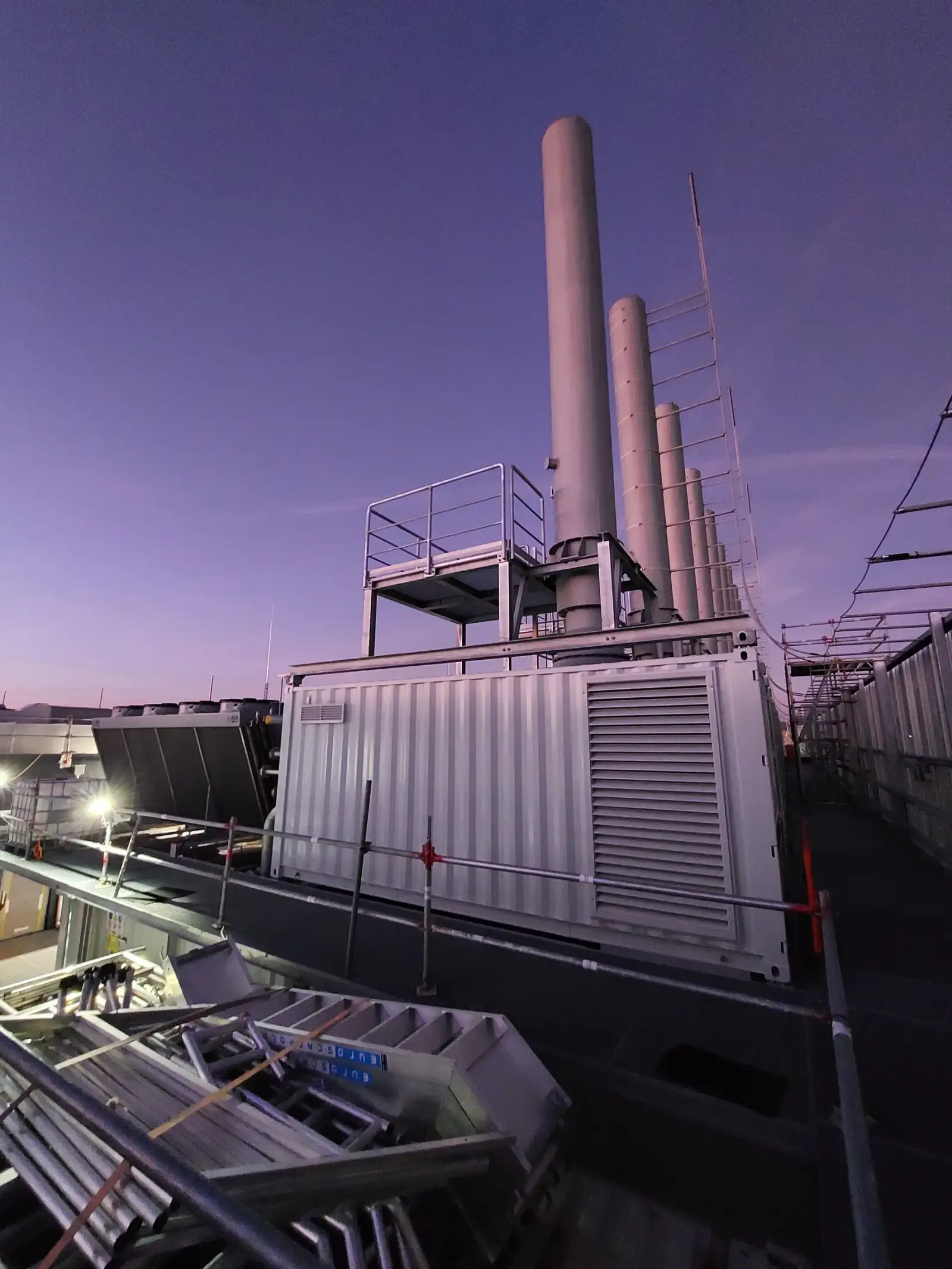
Fourteen complete exhaust systems, each combining an integrated exhaust silencer and a self-supporting chimney, engineered to hold the diesel backup gensets of a new hyperscale datacenter to 75 dB(A) at one metre. CE marked and designed to EN 13084-7, fabricated in-house and delivered as installation-ready modules.
- Industry
- Data Centers
- Location
- Germany
- Year
- Solutions
- Noise Control
- 14Exhaust systems
- 75 dB(A)At 1 m
- EN 13084-7Design standard
- CEMarked
The challenge
A new hyperscale datacenter in Germany is backed by a fleet of diesel gensets, sized to carry the full IT load through a grid outage. The engines run only intermittently, for scheduled testing and genuine emergencies, but each one exhausts through a stack that has to clear the roofline and meet a strict noise limit at the site boundary.
The operator needed every genset fitted with a complete exhaust system that did
three jobs at once: attenuate the exhaust noise to 75 dB(A) at one metre,
discharge the flue gas safely above the building, and stand as a self-supporting
structure able to take wind and seismic loads without an external frame. The
systems also had to be CE marked and certified to a recognised chimney standard
for the building permit, and they had to be effectively identical across all
fourteen positions so the site could install and maintain them as one type.
Our approach & engineering
Axces engineered the exhaust system as a single repeatable design, with silencer and chimney integrated into one structural assembly, then validated it for the genset rating on site and repeated it fourteen times. Designing the silencer and the stack together, rather than bolting a silencer onto a separate chimney, kept the assembly compact and let us tune the acoustic and structural performance as one unit.
Acoustic design
The exhaust silencer was sized to bring the genset to 75 dB(A) at one metre
across its operating range, with the attenuation distributed through the system
so the target is met without an oversized standalone silencer. The internals
were specified for the high gas temperatures and flow of a diesel exhaust on a
test run.
Structural design to EN 13084-7
Each chimney is self-supporting and was designed and manufactured to
EN 13084-7, the European standard for the structural steelwork of steel
chimneys. The structural calculation covered wind loading, the dead weight of
the integrated silencer, and thermal expansion of the flue, so each stack stands
on its own base without an external support structure. The complete system
carries the CE mark.
- One integrated silencer-and-chimney design, repeated across all 14 positions
- Self-supporting structure: no external frame required
- Designed and manufactured to EN 13084-7; CE marked
- Sized for the temperature and flow of an intermittently-run diesel genset
- Flanged connection to the genset exhaust manifold for bolt-on installation
Scope of supply
Axces delivered the complete exhaust scope as a repeatable package, fabricated in-house and shipped in installation-ready modules:
- 14 × integrated exhaust silencers, sized to the site’s
dB(A)limit - 14 × self-supporting steel chimneys designed to EN 13084-7
- Flanged inlet connections matched to the genset exhaust manifolds
- Thermal insulation and weather cladding to the exposed stack sections
- CE marking and the supporting structural and acoustic documentation
Results
All fourteen exhaust systems were fabricated to one design and delivered as matching modules, so the site installs, certifies and maintains them as a single type rather than fourteen one-offs.
- Exhaust noise held to 75 dB(A) at one metre across the genset operating range
- 14 identical systems: one set of spares, one maintenance procedure
- Self-supporting chimneys certified to EN 13084-7, CE marked for the permit
- Delivered as installation-ready modules to suit the genset OEM’s field crews
Related reading
- Meeting environmental noise limits at data centers: how backup-generator exhaust silencing and enclosure design meet boundary noise limits
- Understanding dB(A) reduction targets: how to specify acoustic performance: what dB(A), insertion loss, and octave-band data mean when specifying a silencer